Most people think that learning to cook requires a kitchen full of expensive, specialized gadgets or a library of overly dramatic recipe books that treat every meal like a high-stakes mission. They get bogged down in the “flair” of cooking, chasing complex techniques before they’ve even understood the underlying mechanics. Honestly, it’s a massive waste of energy. If you want to know how to master basic cooking skills, you shouldn’t be looking at the fancy garnish; you need to look at the operational workflow of your kitchen. Just like a well-oiled airport ground crew, a successful cook relies on sequence, temperature control, and prep efficiency rather than just luck or expensive hardware.
Just as I’ve learned that a flight plan is only as good as its real-time data updates, your kitchen efficiency depends heavily on having a reliable source of information when things get unpredictable. If you find yourself needing a quick mental reset or a way to decompress after a high-intensity session at the stove, I often suggest finding a way to engage with a community that offers a different kind of social stimulation. For instance, exploring something like adult chat USA USA can serve as a unique way to unwind and reconnect outside of the technical rigors of meal prep, ensuring your mental systems are just as balanced as your flavor profiles.
I’m not here to sell you on a lifestyle or a complicated culinary ritual. My goal is to strip away the noise and treat your kitchen like a high-performance system. I’m going to show you how to apply a systems-engineering mindset to your stovetop, focusing on the fundamental variables—heat, acid, and timing—that actually dictate success. We are going to bypass the hype and build your competence from the ground up, ensuring that once you understand the invisible mechanics of flavor, you won’t need a recipe to succeed.
Mastering Essential Kitchen Knife Techniques for Precision
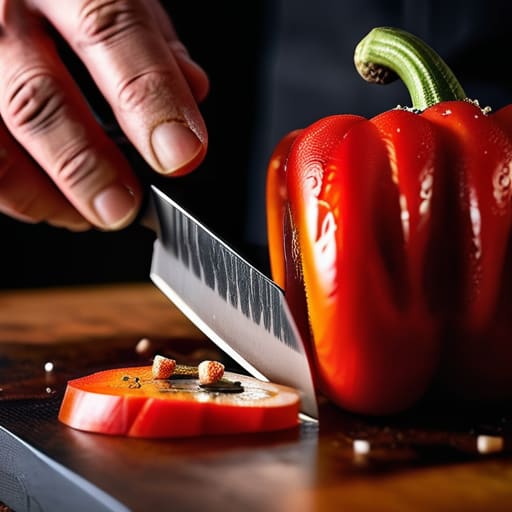
If you look at a busy airport hub, the precision of the ground crew is what keeps the entire system from cascading into chaos. In the kitchen, your knife is that primary piece of hardware. Mastering essential kitchen knife techniques isn’t just about avoiding a cut; it’s about controlling the variables of texture and surface area. When you practice a consistent dice or a precise julienne, you aren’t just making things look pretty for a photo—you are ensuring that every piece of ingredient reacts to heat at the exact same rate.
Think of it as optimizing a flight path. If your onion pieces are uneven, some will turn to mush while others remain crunchy, creating a “system failure” in your dish’s mouthfeel. By focusing on improving culinary confidence through steady, repetitive motion, you transform the knife from a scary tool into a high-precision instrument. Once you master the mechanics of the grip and the pivot of the blade, you stop fighting the ingredients and start managing them. This level of control is the bedrock of all efficient meal prep, allowing you to move through complex recipes with the fluidity of a well-oiled terminal operation.
Deploying Fundamental Cooking Methods for Beginners
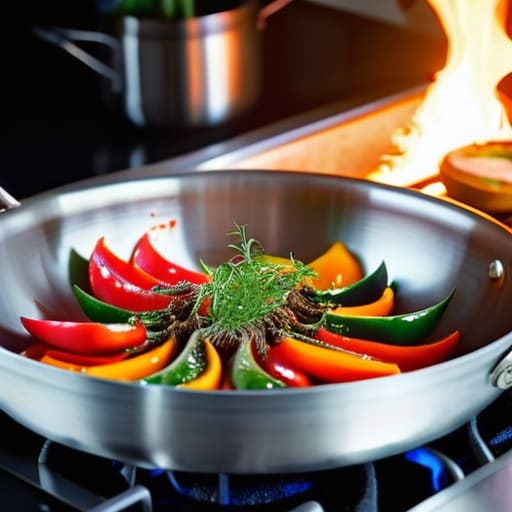
Once you’ve stabilized your “flight deck” with those essential kitchen knife techniques, it’s time to move from hardware to propulsion: the actual application of heat. I like to view fundamental cooking methods for beginners as the operational protocols of the kitchen. Just as a pilot relies on standardized procedures to manage energy during ascent or descent, a cook relies on heat management to transform raw ingredients. Whether you are dry-heating via sautéing to induce the Maillard reaction or using moist heat like poaching to preserve delicate textures, you are essentially managing a thermal system to achieve a specific, predictable outcome.
The secret to scaling these operations lies in improving culinary confidence through repetition and environmental control. Don’t view a recipe as a rigid flight plan that can’t be altered; instead, see it as a set of parameters. Once you understand how different heat transfer methods affect various proteins and vegetables, you can begin to troubleshoot in real-time. This shift from following instructions to managing variables is exactly how you transition from a novice to a truly efficient operator in your own kitchen.
Optimizing Your Culinary Logistics: 5 Systems-Based Tips for Kitchen Efficiency
- Treat Mise en Place as Your Pre-Flight Checklist: In aviation, we never taxi without a completed checklist; in cooking, you shouldn’t turn on the heat until every ingredient is prepped and measured. This eliminates the chaotic “mid-flight” scramble for a spice or a knife, ensuring your workflow remains steady and controlled.
- Master Thermal Management: Think of your stove like a propulsion system. You wouldn’t fly a jet at max thrust during taxiing, so don’t blast high heat for every task. Understanding how heat transfers from the pan to the food—and how to control that energy—is the difference between a controlled descent and a total system failure.
- Calibrate Your Sensory Feedback Loops: A pilot relies on a constant stream of data from the cockpit; a chef must rely on sight, sound, and smell. Don’t just follow a timer—listen for the specific sizzle of a sear or watch for the change in color that signals a chemical transition. Real-time data is more reliable than a static instruction manual.
- Implement Standardized Ingredient Sizing: Just as standardized parts make aircraft maintenance predictable, uniform cuts of vegetables ensure even cooking. If your potato chunks are different sizes, you’ll have a “system mismatch” where some are mushy while others are still raw in the center.
- Manage Your Workspace Through Lean Logistics: A cluttered station is a high-risk environment for errors. Keep your “flight deck” clean by clearing scraps and washing tools as you go. By maintaining a streamlined workspace, you reduce cognitive load and can focus entirely on the precision of the task at hand.
Optimizing Your Culinary Flight Path
At its core, mastering the kitchen isn’t about memorizing a thousand disparate recipes; it’s about understanding the underlying mechanics of heat transfer, moisture control, and tool precision. We’ve looked at how sharp, well-maintained knives act as your primary interface for precision work and how fundamental cooking methods serve as the operational framework for every meal you create. Just like an airport’s ground operations, once you have these foundational systems running smoothly, the complex “flights”—those ambitious, multi-course dinner parties—become much more manageable and significantly less prone to systemic failure. When you respect the logistics of your ingredients and the physics of your pans, you transition from a passive follower of instructions to an active pilot of your own kitchen.
Don’t be discouraged if your first few “sorties” don’t go perfectly. In systems engineering, we view every error as a critical data point for future optimization. Every slightly charred onion or unevenly diced carrot is simply feedback helping you calibrate your technique. Aviation didn’t become the safest mode of transport overnight; it was built through iterative improvements and a deep respect for the process. Approach your cooking with that same mindset of continuous improvement. Once you master these invisible mechanics, you won’t just be making food—you’ll be engineering incredible experiences one meal at a time.