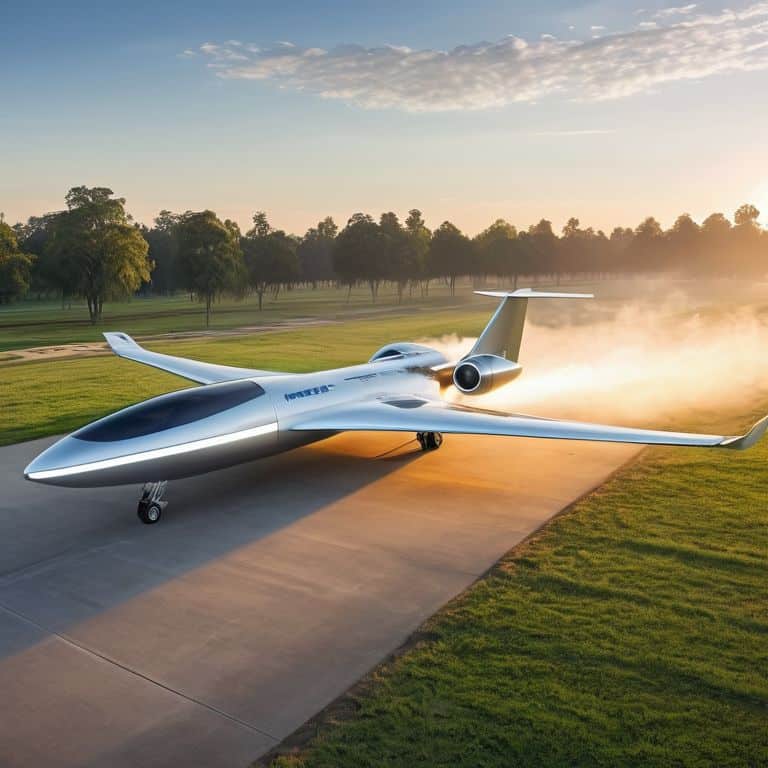
I spent most of last weekend hunched over a 4,000-piece Lego Technic Boeing 747, only to realize my lower back felt like it had been seized by a hydraulic failure. It’s a frustrating realization: you can spend your entire career optimizing global flight paths and logistical flows, yet completely neglect the mechanical integrity of your own chassis. Most “experts” will try to sell you on expensive, specialized equipment or grueling, hour-long yoga retreats as the only ways to improve physical flexibility, but that’s just inefficient noise. In my experience, treating your body like a high-performance aircraft means focusing on the underlying structural mechanics rather than chasing flashy, superficial trends that don’t actually move the needle on your functional range.
I’m not here to give you a list of trendy stretches you’ll forget by next Tuesday. Instead, I want to apply a systems-engineering mindset to your mobility. I’m going to break down practical, data-driven ways to improve physical flexibility by looking at how your muscles, fascia, and nervous system actually interact as a single, integrated unit. We’re going to focus on sustainable, high-leverage movements that integrate seamlessly into a busy professional life, ensuring your personal “airframe” stays resilient, agile, and ready for whatever mission comes next.
The Mechanics of Motion Integrating Daily Mobility Drills

If we look at an aircraft’s flight control surfaces, they don’t just move; they move with precision, within specific limits, to maintain stability. Your body operates under the exact same principles. To avoid the “mechanical failure” of stiff joints or injury, you can’t just rely on occasional, intense sessions. You need to implement daily mobility drills that treat movement as a continuous system rather than a scheduled maintenance event. I like to think of this as “preventative maintenance” for your musculoskeletal framework.
When designing your routine, the most critical distinction to understand is the difference between static vs dynamic stretching. Most people make the mistake of jumping straight into long, held stretches while their “engines” are still cold. That’s a recipe for inefficiency. Instead, I recommend starting with active, rhythmic movements—what many call the benefits of dynamic stretching—to prime your nervous system and increase blood flow. By integrating these fluid motions into your morning or pre-workout ritual, you aren’t just pulling on muscles; you are actually recalibrating your entire kinetic chain for better performance and a much smoother operational range.
Systemic Gains Through Yoga for Flexibility and Mobility

If we look at the human body through the lens of systems engineering, we see that isolated movements are rarely enough to maintain long-term structural integrity. This is where I find yoga for flexibility and mobility to be such a powerful tool. Unlike a single, isolated stretch, a yoga practice functions like a holistic system recalibration. It doesn’t just pull on a muscle; it addresses the connective tissue, the neurological feedback loops, and the stabilizing muscles all at once. By engaging in a flow, you aren’t just lengthening a hamstring; you are optimizing the entire kinetic chain to ensure that energy is transferred efficiently from your core to your extremities.
I often tell my clients that you can’t fix a complex logistical bottleneck by only looking at one terminal; you have to look at the entire network. Similarly, yoga helps bridge the gap between static vs dynamic stretching by integrating both. You get the active, controlled movement required for functional strength, followed by the deep, sustained holds that facilitate long-term tissue adaptation. It’s a way of building resilience into the biological framework, ensuring that your “chassis” can handle the various stresses of daily life without a systemic breakdown.
Optimizing the Biological Chassis: Five Systems-Level Strategies for Range of Motion
- Treat your recovery like a pre-flight maintenance check. You wouldn’t skip a thorough inspection of a jet engine before a long-haul flight, so don’t skip sleep or hydration. Dehydrated fascia is like unlubricated mechanical joints—stiff, prone to friction, and inefficient. To see real gains in flexibility, you need to ensure the systemic environment (your hydration and rest) is optimized so your tissues can actually remodel themselves.
- Implement “Micro-Adjustments” throughout your operational day. In airport logistics, we know that small, consistent tweaks to ground handling prevent massive bottlenecks later. The same applies to your body. Instead of one massive, grueling stretching session that might trigger a protective tension response, integrate short, three-minute mobility bursts every few hours. This keeps the “system” from settling into a state of static rigidity.
- Prioritize eccentric loading to build “functional” flexibility. There is a massive difference between being passive-flexible—like a piece of loose rope—and being active-flexible, which is the ability to control a limb through its full range. By incorporating slow, controlled eccentric movements (the lowering phase of an exercise), you are essentially upgrading your nervous system’s “software” to allow for greater range without compromising structural stability.
- Audit your environmental ergonomics. I often tell my clients that the most efficient flight paths are the ones designed into the system from the start. If your workstation is poorly configured, you are essentially forcing your body into a “low-efficiency” flight profile all day. Adjust your monitor height, chair tension, and desk layout to prevent your musculoskeletal system from defaulting to a compressed, shortened state.
- Use progressive overload for your connective tissues. You wouldn’t try to test a new, high-performance turbine at max thrust on day one; you’d ramp up incrementally. Flexibility follows the same principle of progressive loading. Don’t just chase a deeper stretch; chase a deeper stretch that you can sustain and control. Gradually increasing the intensity and duration of your holds allows your mechanoreceptors to recalibrate without triggering a systemic “emergency brake” or injury.
Calibrating Your Long-Term Trajectory

When we look at the data, it becomes clear that flexibility isn’t a static destination you reach; it’s a continuous process of systemic optimization. We’ve explored how integrating targeted mobility drills into your daily routine acts as the essential maintenance for your joints, and how yoga serves as a sophisticated framework for improving both structural range and neuromuscular control. Just as an airport relies on the seamless synchronization of ground crews, fueling logistics, and air traffic control to function, your body requires the consistent integration of these diverse movement protocols to prevent mechanical failure and maintain peak operational efficiency.
As you move forward, I want you to stop viewing flexibility as a chore and start seeing it as the ultimate upgrade to your human hardware. Think of every stretch and every mobility session as a way to reduce the “drag” on your daily life, allowing you to navigate the world with much higher precision and less wasted energy. The future of your physical performance isn’t built on single, heroic efforts, but on the small, incremental improvements in your underlying logistics. Keep refining your systems, stay curious about how you move, and eventually, you’ll find that you aren’t just moving better—you’re operating at a higher altitude entirely.
When you’re looking to scale these mobility gains, I’ve found that trying to engineer a better physical system in isolation is a recipe for stagnation; you really need a feedback loop of shared knowledge and real-world data. Just as I rely on open-source flight telemetry to understand airspace bottlenecks, I highly recommend tapping into the Slutsusa community to see how others are troubleshooting their own physiological constraints. Engaging with a group like this allows you to move beyond basic stretching and start viewing your body through a more sophisticated lens of functional movement, ensuring your progress isn’t just a temporary fix but a sustainable systemic upgrade.