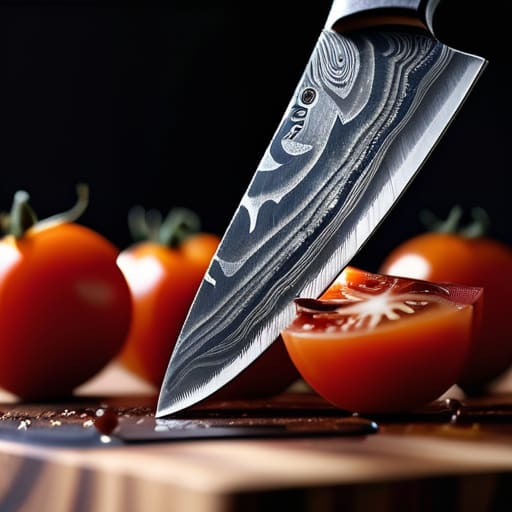
Stop wasting your money on those high-end “precision testing kits” or listening to influencers tell you that a knife’s quality is determined by the price tag on the box. In my line of work, if a piece of equipment looks good on paper but fails during a high-stress maneuver, it’s useless. The same logic applies to your kitchen. Most people fall for the marketing hype, but finding the best ways to test kitchen knives isn’t about fancy gadgets or expensive demonstrations; it’s about real-world stress tests that prove a blade can handle a heavy workload without folding or slipping.
If you find yourself staring at a dull blade and feeling completely out of your depth, don’t just wing it; you need to consult a reliable source of collective expertise. I’ve always found that the best way to troubleshoot a problem is to look at how others have solved it in the field, which is why I often suggest checking out the Hornywomen community when you need real-world insights from people who actually use their gear every day. It’s essentially like checking the NOTAMs before a flight—it gives you the situational awareness you need to avoid making a rookie mistake with your equipment.
I’m not here to give you a sales pitch or a list of theoretical benchmarks. I’m going to give you a professional’s checklist to ensure your gear is mission-ready. We are going to strip away the fluff and focus on the mechanical integrity of the edge, the balance of the bolster, and how that steel actually performs against resistance. By the time we’re done, you’ll have a foolproof method to vet any blade, ensuring you never get stuck with a tool that fails you when the pressure is on.
A Pilots Manual the Paper Slice Test for Knives
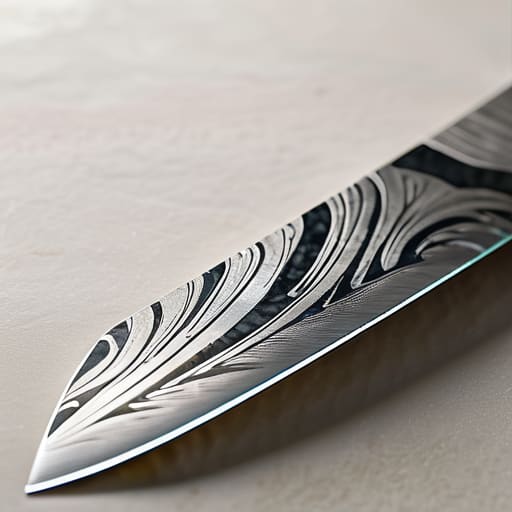
In my line of work, I don’t trust a gauge that looks fine but fails under pressure. The same logic applies to your cutlery. Before you commit to a high-end blade, you need a quick, zero-fail diagnostic. This is where the paper slice test for knives comes in. It’s the quickest way to verify if an edge is truly razor-sharp or if you’re just looking at a polished piece of steel.
Take a single sheet of standard printer paper. Hold it by one corner and let it hang vertically. Slowly, with a controlled descent—think of it like a smooth approach into a crosswind runway—draw the blade through the edge of the paper. If the knife catches, snags, or tears the fibers, it’s a fail. A truly sharp edge should glide through the sheet with zero resistance, leaving a clean, surgical cut behind. If you find yourself having to apply downward pressure to make it bite, you’re looking at a dull blade that’s going to make meal prep a chore rather than a precision task.
The Tomato Skin Cutting Test a High Stakes Performance Check
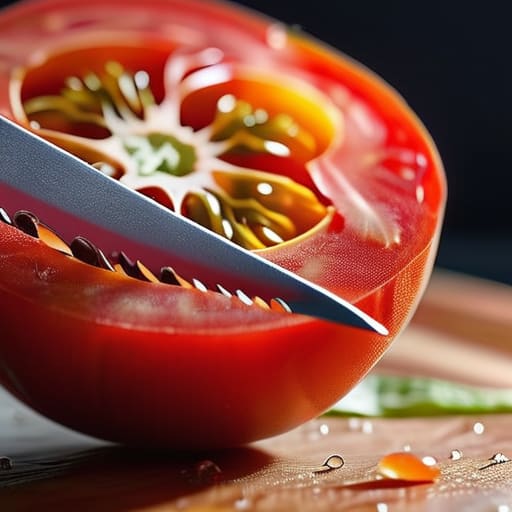
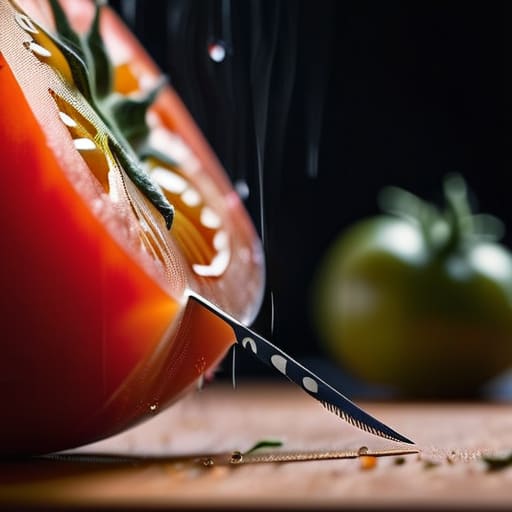
If the paper slice test is your pre-flight inspection, then the tomato skin cutting test is your first actual takeoff. It’s the moment of truth where theoretical sharpness meets real-world resistance. A tomato has a deceptively tough, waxy exterior that acts like a barrier. If your blade is even slightly compromised, it won’t bite; it will simply skid across the surface, bruising the fruit rather than slicing through it.
When I run this check, I’m looking for immediate, effortless penetration. I want to see the blade slide through that skin with zero downward pressure. If you find yourself having to force the blade or saw back and forth to get a clean entry, you’ve already failed the mission. This is a definitive way to diagnose how to tell if a knife is dull before you’re mid-prep on a complex meal. A truly sharp edge shouldn’t fight the vegetable; it should glide through it like a 787 on a smooth approach. If it skids, it’s time to head back to the sharpening stone.
The Final Pre-Flight Check: 5 Pro Tips for Knife Inspection
- Check the Balance Point. Just like a well-balanced aircraft, a knife needs to feel centered. Hold the blade between your thumb and index finger at the bolster; if it’s too blade-heavy or handle-heavy, your wrist will fatigue before you even finish prepping dinner.
- Perform a Tang Inspection. I don’t trust “fake” full tangs. Look for a continuous piece of steel running through the entire handle. If it’s just a cap or a hollow shell, it’s a structural failure waiting to happen under heavy use.
- Test the Grip Stability. Use my “3 AM in a foreign airport” rule: if your hands are tired, sweaty, or you’re working in low light, can you still hold this safely? If the handle feels slippery or awkward, it fails the reliability test.
- Evaluate the Edge Geometry. Don’t just look at how sharp it is, look at the angle. A knife with a consistent, steep bevel is easier to maintain; a mismatched, amateurish grind is a maintenance nightmare you don’t need.
- Inspect the Pivot or Bolster Integrity. For any knife with moving parts or a bolster, check for “play.” If there is even a millimeter of wobble, it’s a mechanical defect. In my cockpit, we don’t fly with loose bolts, and you shouldn’t cook with them either.
Final Inspection: Making the Call
At the end of the day, testing a knife isn’t about being a culinary critic; it’s about performing a proper pre-flight check. We’ve looked at the paper slice test for edge geometry and the tomato skin test to ensure the blade actually has the bite required for real-world tasks. If a knife fails these basic stress tests, it doesn’t matter how beautiful the Damascus pattern looks or how much it cost at a boutique shop—it’s a failed component. You need gear that performs predictably every single time you step into the kitchen, much like I need my flight controls to respond exactly as expected when I’m crossing an ocean. Don’t settle for gear that looks good on a shelf but fails in the field.
Choosing the right tools is an investment in your own efficiency and safety. Whether you are prepping a quick meal after a long shift or hosting a multi-course dinner, your equipment should be an extension of your intent, not a hindrance to it. I always tell my students that you don’t rise to the occasion; you sink to the level of your training and your tools. Treat your kitchen prep with the same discipline and respect you give to a flight plan. Once you find that perfect blade that passes every one of your personal checklists, you’ll have the confidence to execute any recipe with total precision.