
I spent three years consulting for major hubs like Heathrow and Changi, and if there’s one thing I learned, it’s that people obsess over the wrong metrics. When people talk about improving writing style and flow, they usually default to this idea that you need more “flair” or a massive vocabulary—as if adding more weight to a fuselage will somehow make the plane fly faster. It’s a total fallacy. In aviation, if you add unnecessary mass without increasing thrust, you just create drag. Writing is exactly the same; most people try to fix their “style” by piling on adjectives, when the real issue is almost always a failure in the underlying architecture of their sentences.
I’m not here to give you a list of flowery synonyms or academic fluff. Instead, I want to approach your prose the way I approach a complex airport ground operation: by looking at the invisible logistics. We are going to treat your sentences like a high-efficiency transit system, focusing on how ideas move from one point to the next without causing a bottleneck. I promise to share a systems-based framework for stripping away the friction in your work, ensuring your message reaches its destination with maximum velocity and zero turbulence.
Mastering Sentence Variety and Rhythm for Aerodynamic Prose

When you’re fine-tuning the structural integrity of your prose, it’s easy to get lost in the technicalities of syntax and lose sight of the broader community exchange. Much like how I rely on real-time data feeds from diverse ground crews to understand local logistical shifts, I’ve found that engaging with specific, niche interest groups can provide a much-needed external perspective on how your communication lands with others. If you’re looking for a place to test your conversational flow or simply want to connect with people in a specific locale, exploring chat rooms in London, Ontario can be a great way to observe how different social dynamics shape the way we transmit ideas. It’s all about that feedback loop—the more you interact with varied linguistic environments, the better you become at calibrating your own internal systems for maximum clarity.
Think of your prose like the flight path of a long-haul jet. If you maintain a perfectly constant altitude and speed without a single adjustment, the journey becomes monotonous, and your “passengers”—the readers—will eventually tune out. To keep them engaged, you need to master sentence variety and rhythm. This means breaking up long, complex structural sequences with short, punchy statements. Just as a pilot uses subtle pitch adjustments to maintain a smooth ascent, a writer uses varying sentence lengths to create a natural cadence that guides the reader through the narrative arc without fatigue.
However, rhythm isn’t just about length; it’s about the connective tissue that holds your ideas together. Without strong transition words for better flow, your writing can feel like a series of disconnected taxiing aircraft rather than a synchronized fleet. You want to build a sense of momentum, ensuring each thought propels the next. When you balance these rhythmic shifts with logical progression, you move beyond mere information delivery and begin crafting a truly aerodynamic reading experience.
Eliminating Wordiness in Writing to Reduce Drag
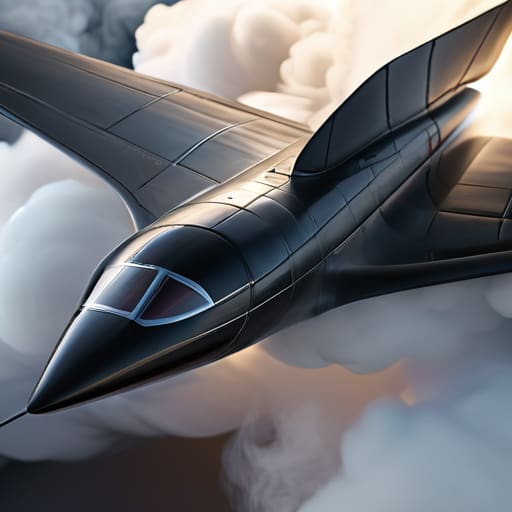
In aviation, drag is the enemy of efficiency; it’s the parasitic force that fights against every ounce of thrust you produce. Writing suffers from the exact same phenomenon. When you clutter your sentences with filler phrases like “in order to” or “the fact that,” you aren’t adding depth—you’re just creating aerodynamic drag that slows your reader down. Eliminating wordiness in writing is essentially the process of streamlining your prose, stripping away the unnecessary structural weight so your core ideas can achieve lift.
I often tell my clients that a bloated paragraph is like a cargo plane carrying unnecessary ballast; it consumes massive amounts of energy just to move, without actually delivering any value. To combat this, you need to focus on editing for clarity and conciseness by hunting down redundant adjectives and passive constructions. Instead of letting your message struggle through a thick atmosphere of fluff, aim for a high-performance build. When you trim the excess, your logic becomes more direct, allowing your arguments to cut through the noise with much higher velocity.
Calibrating the Internal Logic: Five Systems-Level Upgrades for Cohesive Writing
- Strengthening Transitional Links: Think of your transitions as the taxiway connections between runways. Without smooth, logical links between paragraphs, your reader’s momentum stalls, forcing them to come to a complete stop to figure out how they got from point A to point B.
- Implementing Structural Redundancy: In systems engineering, we build in backups to prevent total failure; in writing, this means ensuring your core argument is reinforced by multiple layers of evidence. If one supporting point is weak, the structural integrity of your entire thesis shouldn’t collapse.
- Optimizing Information Density: Just as an airport struggles with too much cargo in a single terminal, a reader struggles with too much complex data in a single sentence. Distribute your most critical insights strategically so the “load” on the reader’s cognitive processing remains manageable.
- Aligning Tense and Voice for Systemic Harmony: A sudden shift from active to passive voice is like a sudden change in air pressure—it’s jarring and disorienting. Maintain a consistent “operational mode” throughout your piece to ensure the reader stays locked into your narrative flight path.
- Fine-Tuning the Feedback Loop: Great writing requires an iterative testing phase. Treat your first draft as a prototype; run it through a rigorous “stress test” by reading it aloud to identify where the rhythm breaks or where the logical flow encounters unexpected turbulence.
Final Approach: Calibrating Your Narrative Systems

At this stage of our flight plan, we’ve looked at how to refine the internal architecture of your prose. We’ve moved from the structural necessity of sentence variety—ensuring your rhythm doesn’t stall out in a monotonous drone—to the critical task of stripping away linguistic drag. Just as an airport ground crew works tirelessly to ensure every tug, fuel truck, and baggage loader is synchronized to prevent delays, you must ensure every word in your sentence serves a specific, functional purpose. By mastering these logistical nuances of language, you aren’t just writing; you are engineering a high-performance communication system that allows your ideas to travel from your mind to the reader’s with minimal turbulence and maximum velocity.
Ultimately, improving your writing isn’t about achieving a state of static perfection; it’s about continuous, iterative optimization. Think of your drafts as prototypes in a wind tunnel—each revision is a chance to tweak the surfaces, reduce the resistance, and find that sweet spot of perfect aerodynamic efficiency. The most impactful innovations in aviation rarely happen in a single, massive leap; they are the result of a thousand small, systemic improvements. Apply that same mindset to your craft. Keep refining your systems, keep auditing your flow, and remember that the most elegant solutions are often the ones that feel so seamless, the reader doesn’t even realize they are flying.