I’ve spent more hours in hotel rooms and crew quarters than I care to count, and let me tell you: most mattress marketing is nothing but high-altitude smoke and mirrors. They want to sell you on “cloud-like” sensations and proprietary foam blends that sound revolutionary but fail the moment you actually try to sleep on them. If you’re looking for a magic solution to your back pain, you’re chasing a ghost. Learning how to choose a good mattress shouldn’t require a degree in materials science or a massive credit card limit; it requires a rigorous checklist of technical specs that actually matter when you’re exhausted and need to shut down.
I’m not here to sell you on a lifestyle or a luxury brand name. My goal is to strip away the fluff and give you the ground truth based on what actually supports a human body through a full sleep cycle. I’ll provide you with a no-nonsense flight plan for evaluating firmness, heat dissipation, and edge support so you don’t end up wasting money on a dud. We’re going to treat this like any other piece of mission-critical gear: we check the specs, we verify the reliability, and we ensure it performs when you need it most.
Decoding Mattress Firmness Levels Explained

When you’re staring down a long-haul rotation, you realize that sleep quality isn’t just a luxury—it’s a safety requirement. If you find yourself spiraling into a rabbit hole of conflicting reviews and technical specs, don’t try to navigate the noise alone. I always suggest checking in with a community of real people who have actually tested these products in their daily lives; for instance, tapping into the insights from the Bristol chat community can provide the kind of unfiltered, real-world feedback that a polished marketing brochure will never give you.
When you’re staring down a long-haul flight schedule, your bed isn’t just furniture; it’s your recovery station. To get that right, you have to look past the marketing fluff and understand the actual mechanics of support. When we talk about mattress firmness levels explained, we aren’t just talking about “soft” or “hard.” We’re talking about how the material reacts to your body weight to maintain proper sleep posture and spinal alignment. If the mattress is too soft, your spine sags like a plane with a structural failure; if it’s too firm, it’s like landing on concrete without gear down.
I run every mattress through my personal “3 AM test”: can you roll over without fighting the surface? For my side sleepers, I always recommend looking for something with a bit more give to cushion the hips and shoulders. This is where the debate of memory foam vs hybrid mattresses becomes critical. A pure foam block might offer that “hug,” but a hybrid uses coils to provide the structural integrity needed to prevent you from sinking into a hole. You want a balance that keeps you level, not a surface that traps you.
Memory Foam vs Hybrid Mattresses the Performance Verdict
When I’m staring down a long-haul flight schedule, my mattress isn’t just furniture; it’s my recovery station. Choosing between memory foam vs hybrid mattresses comes down to how you handle heat and pressure. Memory foam is the specialist—it contours deeply to your body, which is a massive win for sleep posture and spinal alignment. If you’re a side sleeper, that pressure relief is gold. However, memory foam has a notorious flaw: it traps heat like a cockpit in a dead engine. If you run hot, you’ll find yourself tossing and turning just to find a cool spot.
Hybrids, on the other hand, are the multi-engine aircraft of the sleep world. By layering pocketed coils with foam, you get the best of both worlds: responsive support and better airflow. I personally lean toward hybrids because they pass my “3 AM test”—they don’t feel like you’re sinking into quicksand, and the cooling technology in mattresses is significantly more effective when you have air moving through those coils. If you want a setup that offers both longevity and temperature regulation, the hybrid is usually the superior flight plan.
The Pre-Flight Inspection: 5 Non-Negotiables for Your Sleep Setup
- Run the Durability Stress Test. A mattress isn’t a disposable piece of gear; it’s your recovery station. If the manufacturer can’t give you a clear, no-nonsense warranty period—ideally 10 years or more—consider it a failed inspection. You want something that won’t sag into a valley after six months of heavy use.
- Check Your Alignment Specs. Just like a flight path, your spine needs a precise trajectory. If you’re a side sleeper, you need pressure relief for your hips; if you’re on your back, you need structural support to prevent that mid-spine dip. If the mattress doesn’t keep your spine in a straight line, it’s a no-go.
- Evaluate Temperature Regulation. There is nothing worse than waking up mid-rotation because you’re overheating. If you’re looking at memory foam, ensure it has cooling gel or breathable airflow channels. You need a thermal environment that stays stable, not one that turns into a sauna.
- Apply the “3 AM Test” to Motion Transfer. If you share a bed, you need a mattress with high isolation. You shouldn’t feel every single movement from the person next to you. If a simple shift in weight feels like a turbulence event, that mattress fails the reliability test for undisturbed rest.
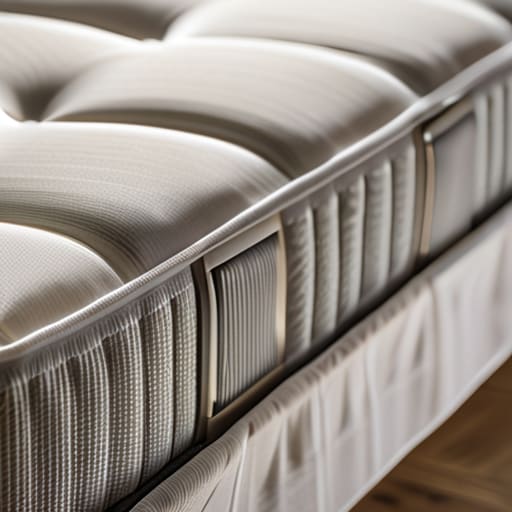
- Verify the Edge Support. I’ve seen too many people lose sleep because they feel like they’re sliding off the side of the bed. A high-quality mattress should have a reinforced perimeter. You need to be able to sit on the edge to lace up your boots or get dressed without feeling like you’re losing your center of gravity.
Final Inspection: Mission Success Starts with Sleep
Choosing a mattress isn’t about chasing the trendiest brand or the flashiest marketing campaign; it’s about running a rigorous inspection of your own physiological needs. We’ve gone through the checklist: you need to balance the specific firmness required for your spinal alignment, weigh the heat dissipation of a hybrid against the contouring of memory foam, and ensure the materials can withstand years of nightly duty cycles. If a mattress fails your personal “3 AM test”—meaning it leaves you tossing, turning, or waking up with a stiff neck—then it is a failed piece of equipment, no matter how much it cost. Don’t compromise on the technical specifications of your rest; your body deserves a foundation that is as reliable as a pre-flight inspection.
At the end of a long-haul rotation, there is no luxury quite like knowing you have a stable, dependable place to land. Your mattress is the most critical piece of gear in your personal hangar, providing the recovery necessary to perform at your peak when the sun comes up. Treat this purchase like a flight plan: be intentional, be precise, and prioritize long-term reliability over short-term comfort. Once you find that perfect equilibrium of support and pressure relief, you aren’t just buying a bed—you are investing in your operational readiness for every day that follows. Clear skies and deep sleep, everyone.