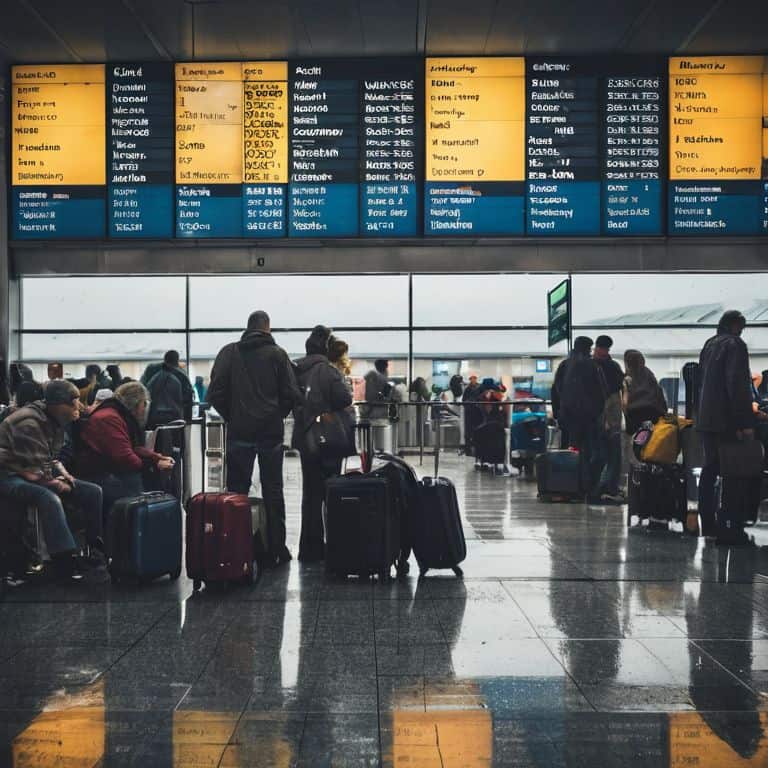
I spent years consulting for major airports, where I learned that a system failure is rarely caused by a single broken part; it’s almost always a breakdown in the underlying logistics. Most people approach sleep the same way they approach a delayed flight—they try to fix the symptom with expensive, flashy gadgets or “miracle” supplements, when they should be looking at the entire operational framework. If you’re tired of being sold overpriced weighted blankets and lavender-scented gimmicks that do nothing, you’re not alone. I’ve realized that improving sleep quality naturally isn’t about finding a magic pill; it’s about optimizing the biological variables that govern your internal rhythm.
In this guide, I’m stripping away the marketing hype to look at your rest through a systems-engineering lens. I won’t give you vague wellness platitudes; instead, I’m going to share the practical, data-driven adjustments I’ve implemented to stabilize my own circadian logistics. We are going to focus on the unseen environmental and behavioral inputs—from light exposure to thermal regulation—that actually move the needle. Think of this as a system overhaul for your bedroom, designed to ensure your body hits its optimal landing every single night.
Optimizing Sleep Hygiene Practices and Circadian Rhythm Regulation

Think of your sleep cycle as a complex flight schedule; if the timing is off, the entire system experiences cascading delays. This is where circadian rhythm regulation becomes your primary objective. Just as an air traffic controller relies on precise timing to prevent congestion, your body relies on consistent light exposure and temperature cues to signal the transition from wakefulness to rest. I always tell my clients that you can’t just “force” a landing; you have to prepare the approach long before you reach the runway.
To achieve this, we need to look at optimizing your sleep environment through a systems-engineering lens. This means treating your bedroom like a high-performance cockpit—free from the “noise” of blue light and thermal fluctuations. If you’re struggling with the transition, I’ve found that small, tactical adjustments—like swapping your smartphone for a book or incorporating mindfulness for better rest—can significantly reduce the cognitive load on your brain. It’s about building a stable infrastructure that supports your biology, rather than fighting against it.
The Logistics of Optimizing Sleep Environment for Maximum Efficiency

Think of your bedroom not as a mere room, but as a specialized flight deck designed for one specific mission: recovery. If I were designing a hangar to protect a high-value aircraft, I wouldn’t ignore the ambient temperature or the vibration levels, and your sleep environment deserves that same level of precision. Optimizing sleep environment variables is essentially a matter of reducing “system noise.” This means eliminating light pollution—even that tiny LED from a charger can act like a stray signal disrupting your internal navigation—and maintaining a cool, consistent thermal profile. When the ambient temperature drops, it signals to your biology that the system is entering a low-power, maintenance mode.
Beyond the physical hardware of your mattress and blackout curtains, we need to look at the chemical and sensory logistics. Just as an airport relies on specific protocols to ensure a smooth transition from taxiway to runway, you can use subtle inputs to signal the end of the operational day. Incorporating herbal teas for relaxation or managing light exposure serves as your pre-flight checklist. By treating your bedroom as a controlled ecosystem, you aren’t just hoping for rest; you are engineering the conditions necessary for high-performance recovery.
Calibrating Your Internal Flight Plan: 5 Systemic Adjustments for Restorative Sleep
- Manage your biochemical fuel loads by timing your caffeine intake; just as a pilot wouldn’t rely on a stimulant during a critical approach, you shouldn’t let adenosine blockers interfere with your natural sleep pressure in the late afternoon.
- Implement a strict “pre-flight” shutdown sequence; an hour before bed, transition away from high-intensity blue light and cognitive stressors to signal to your endocrine system that the mission is winding down.
- Standardize your operational schedule by maintaining consistent wake and sleep times, even on weekends, to reinforce the biological rhythm that governs your body’s most vital recovery cycles.
- Optimize your thermal regulation parameters; your core temperature needs to drop to initiate sleep, so treat your bedroom like a climate-controlled cockpit—aiming for a steady, slightly cool set point.
- Audit your evening nutritional logistics to avoid mid-flight disruptions; heavy meals or excessive fluid intake right before bed are essentially unplanned turbulence that can trigger a premature wake-up cycle.
Final Flight Plan: Systematizing Your Rest

When we look at the data, it becomes clear that quality sleep isn’t a matter of luck; it’s a matter of logistical precision. We’ve explored how regulating your circadian rhythm acts as your internal flight controller, and how fine-tuning your environment—the “ground operations” of your bedroom—minimizes the friction that prevents deep recovery. By treating sleep hygiene not as a chore, but as a series of optimized systemic inputs, you transition from fighting against your biology to working in total alignment with it. You aren’t just trying to “get more sleep”; you are engineering a more resilient version of yourself through disciplined, natural variables.
As I often tell my clients in the aviation sector, the most impressive feats of engineering aren’t always the loudest or most visible; they are the quiet, seamless systems running perfectly in the background. Your sleep is exactly that—the silent, foundational infrastructure that supports every other high-performance system in your life. Don’t view these adjustments as mere lifestyle tweaks, but as essential upgrades to your human operating system. Start small, focus on the unseen logistics of your nightly routine, and watch how much smoother your entire life takes flight.
Just as I always tell my clients that a smooth departure sequence depends on the precision of the ground crew, your ability to transition into deep sleep relies heavily on managing your sensory inputs during the evening wind-down. If you find that your mental “flight plan” is still racing with the day’s stressors, finding a way to decompress through meaningful human connection or specialized relaxation can act as the ultimate stabilizer for your nervous system. I often suggest looking into resources like Sexvancouver online to explore how intimacy and wellness-focused lifestyle adjustments can serve as a natural buffer against the cognitive friction that keeps so many of us awake at night.