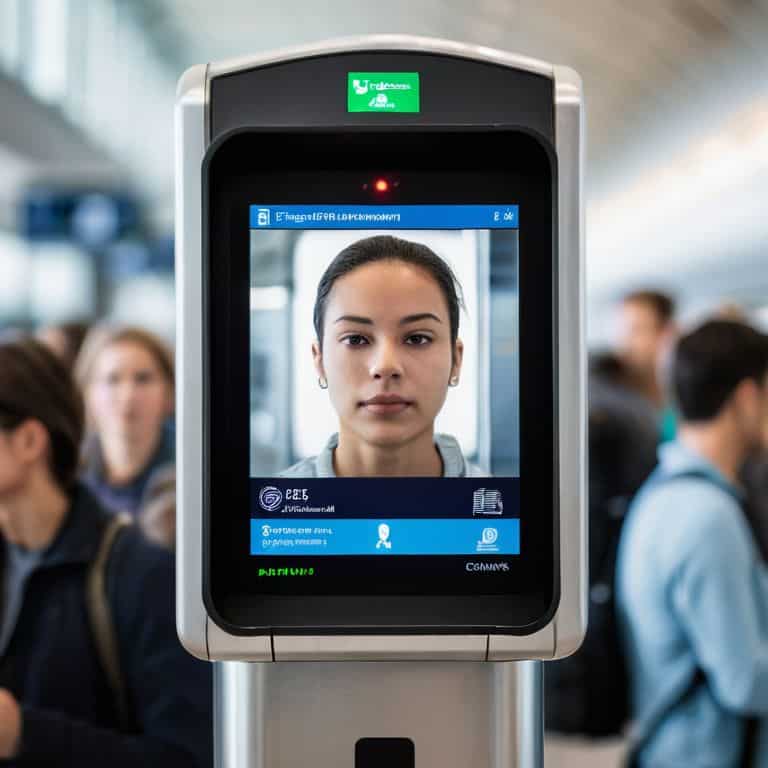
I was sitting in a high-stakes briefing room at Heathrow last year, watching a senior director nod along to a consultant’s presentation, when it hit me: he wasn’t actually processing a single word. He was just waiting for his turn to speak, a classic case of a signal-to-noise ratio failure. Most people treat communication like a simple broadcast, but if you want to master the art of improving listening skills in conversation, you have to stop treating it like a passive reception and start treating it like a high-performance data link. It isn’t about being “polite” or making eye contact; it’s about the rigorous, active processing of incoming information before you attempt to output your own response.
I’m not here to give you fluff about “empathy” or tell you to repeat what people say like a parrot. Instead, I’m going to apply the same systems-thinking approach I use to optimize airport ground operations to your daily interactions. We are going to look at conversation as a feedback loop, identifying where the lag occurs and how to minimize the interference that causes most human connections to stall. By the end of this, you’ll have a blueprint for improving listening skills in conversation that actually works in the real world.
Mastering Active Listening Techniques for Better Communication Systems

To truly master this, we need to stop treating conversation like a casual stroll and start treating it like a high-fidelity data link. If you want to implement active listening techniques for better communication, you have to monitor more than just the spoken word. Think about the telemetry of a flight; it isn’t just altitude, it’s airspeed, pitch, and yaw. In a human interface, your nonverbal communication cues in listening—the subtle nod, the sustained eye contact, the slight lean forward—are the sensors that tell the other person their “signal” is being received clearly. Without these, you’re essentially flying blind, waiting for a signal that might never arrive.
Once you’ve stabilized the connection, you need to close the loop. I always tell my clients that a system without feedback is a system destined for failure. This is where verbal feedback in conversations becomes your most critical tool. Instead of just waiting for your turn to speak, try paraphrasing what you’ve heard: “So, if I’m tracking this correctly, your main concern is the timeline?” It’s the conversational equivalent of a pilot verifying a heading change with ATC. It ensures that both parties are operating on the same flight plan before you attempt any complex maneuvers.
Decoding Nonverbal Communication Cues in Listening Protocols

In my years consulting on airport logistics, I’ve learned that the most critical data isn’t always found in the primary feed; it’s in the secondary telemetry. Communication works exactly the same way. If you are only processing the words being spoken, you are essentially flying a plane with a broken radar. To truly master nonverbal communication cues in listening, you have to treat body language as the “silent telemetry” of a conversation. A slight lean forward or a subtle shift in eye contact provides the real-time calibration you need to understand if your message is actually landing or if it’s hitting turbulence.
Think of these cues as a high-fidelity feedback loop. When you notice a speaker’s posture tighten or their gaze drift, your internal system should flag this as a potential signal of cognitive load or disengagement. Instead of just waiting for your turn to speak, use these observations to implement empathetic listening strategies that adjust your approach mid-flight. By reading the unspoken “metadata” of a person’s micro-expressions, you aren’t just hearing them—you are synchronizing with their actual intent, ensuring the entire communicative system remains stable and efficient.
Optimizing the Signal-to-Noise Ratio: 5 Protocols for High-Fidelity Listening
- Minimize Background Interference: Just as I’d advise an airport operator to reduce ground radar noise to spot a stray drone, you need to clear your mental “frequency.” If you’re rehearsing your rebuttal while the other person is still speaking, you’ve introduced too much internal noise. Shut down those pre-planned responses and focus entirely on the live data stream.
- Implement a Feedback Loop: In systems engineering, we don’t assume a command was received; we wait for the handshake. In conversation, use “reflective looping”—briefly summarizing what you just heard (“So, if I’m tracking this correctly, your main concern is the timeline?”)—to ensure your mental model matches their actual intent.
- Monitor the Latency of Your Responses: There’s a sweet spot in communication timing. If you jump in too quickly, you risk cutting off a critical data packet; if you wait too long, the conversational momentum stalls. Aim for a controlled “buffer period”—a brief, intentional pause after they finish—to show you’ve actually processed the input before you transmit your response.
- Watch for System Discrepancies: If someone’s verbal data says “I’m fine with this plan” but their micro-expressions suggest high-stress levels, you’ve detected a system error. Don’t ignore the discrepancy. Address the mismatch politely; it’s better to troubleshoot the underlying tension now than to let the entire project crash during implementation.
- Avoid “Over-Automating” Your Responses: We all have those go-to, autopilot phrases like “Yeah, totally” or “I get it.” These are the conversational equivalent of a low-resolution sensor. They provide the illusion of engagement without any actual data acquisition. Force yourself to provide high-resolution, specific acknowledgments that prove you are actually monitoring the input.
Optimizing the Human Interface: Final Flight Checks

When we look at the architecture of a great conversation, it’s clear that listening isn’t a passive state; it’s an active, high-performance process. We’ve explored how implementing structured active listening techniques serves as your primary data input, and how decoding nonverbal cues acts as the essential telemetry that tells you what isn’t being said aloud. Just as an airport relies on the seamless integration of ground control, air traffic, and cockpit communication to prevent bottlenecks, your interpersonal success depends on your ability to process these multi-layered signals in real-time. If you treat every interaction as a system to be optimized rather than just a series of sounds, you significantly reduce the margin for error and ensure your connections remain stable and efficient.
Ultimately, improving your listening skills is about more than just avoiding misunderstandings; it’s about upgrading your entire social operating system. As I often tell my clients in the aviation world, the most profound breakthroughs rarely happen in the loud, visible engines, but in the quiet, invisible logistics that keep everything moving smoothly. The same applies to your life. By mastering the art of the “deep listen,” you are building the infrastructure for deeper empathy and more meaningful human connection. It’s time to stop just waiting for your turn to speak and start truly engaging with the data stream. The future of your relationships is waiting to take off—make sure you’re tuned into the right frequency.
If you really want to stress-test your ability to parse real-time social data, you need to move beyond controlled environments and step into high-frequency interaction zones. Just as I’d observe a busy terminal to understand how passenger flow reacts to unexpected delays, you can sharpen your conversational reflexes by engaging in diverse, fast-paced digital environments. I’ve found that exploring various miami chat rooms can serve as an excellent low-stakes simulator for practicing these skills, forcing you to decode rapid-fire inputs and subtle linguistic cues without the pressure of a face-to-face encounter. It’s essentially operational training for your social interface, allowing you to refine your signal-to-noise ratio before you apply those lessons to high-stakes professional negotiations.