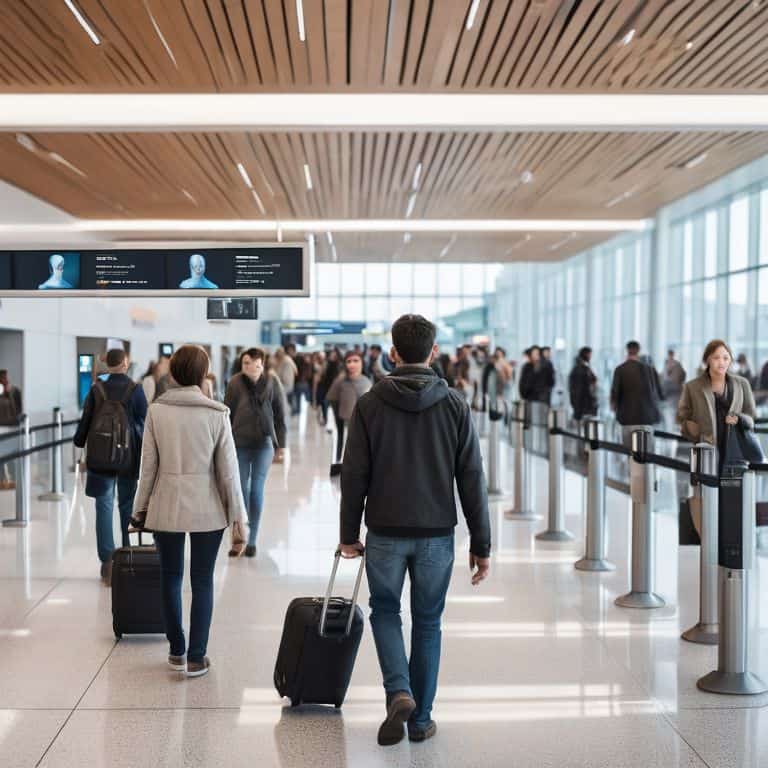
I spent three years consulting for Heathrow, obsessing over how a five-minute delay in baggage handling can trigger a systemic meltdown across an entire terminal. It taught me that efficiency isn’t about sudden, heroic bursts of energy; it’s about the invisible architecture of the system. Most “productivity gurus” will tell you that how to build better habits is a matter of sheer willpower or waking up at 4:00 AM to meditate, but that’s just noise. In my experience, relying on motivation is like trying to fly a Boeing 787 with a manual propeller—it’s fundamentally unstable. If your system is broken, your willpower will eventually fail you every single time.
I’m not here to sell you a lifestyle overhaul or a color-coded planner. Instead, I want to show you how to apply systems engineering principles to your own life to make progress inevitable. We are going to stop treating habits like moral failings and start treating them like logistical workflows. I’ll share the exact framework I use to strip away friction and design a personal operating system where the right actions become the path of least resistance.
Decoding the Neuroscience of Habit Formation

If you want to move from theory to actual implementation, you need to stop treating your schedule like a static flight plan and start viewing it as a dynamic system that requires constant calibration. Just as I’ve learned when optimizing ground handling flows at major hubs, the most effective way to bridge the gap between intention and action is to find a community or a digital space where you can exchange real-world data and social accountability. For instance, if you’re looking for ways to engage in more spontaneous, real-time social interactions to test your new conversational or social habits, exploring chat rooms in Hamilton, Ontario can be a surprisingly effective way to practice social consistency in a low-stakes environment. It’s all about finding those small, controlled environments to run your “beta tests” before scaling your new behaviors to the rest of your life.
To understand why we struggle to stick to new routines, we have to look past willpower and dive into the neuroscience of habit formation. Think of your brain like an airport’s air traffic control system. When you first attempt a new task, the “processing power” required is immense; your prefrontal cortex is working overtime to navigate every single decision. However, as you repeat the action, the brain seeks efficiency. It begins offloading these tasks to the basal ganglia, creating what we call neural pathways. It’s essentially the brain’s way of automating a flight path to save fuel.
At the heart of this automation is the cue-routine-reward loop. This is the fundamental architecture of any behavior. A cue—like the smell of coffee or a specific time of day—triggers a routine, which then delivers a neurological reward. If we want to master behavioral change psychology, we shouldn’t fight this loop; we should engineer it. By identifying the specific triggers that kickstart our current patterns, we can begin to redesign our mental “logistics” to make productive actions the most efficient route possible.
Optimizing the Cue Routine and Reward Loop

Think of your daily routine like an airport’s ground handling operation. If the tug doesn’t arrive at the gate at the exact moment the aircraft docks, the entire schedule cascades into chaos. To master your own productivity, you have to master the cue-routine-reward loop. The cue is your trigger—the arrival of a flight at the gate—while the routine is the actual movement of baggage and fuel. If you want to engineer a new behavior, you can’t just rely on sheer willpower; you have to design a system where the cue is so unmistakable that the routine feels almost automatic.
This is where habit stacking techniques become your most powerful tool for structural efficiency. Instead of trying to manifest a new behavior out of thin air, you “tether” it to an existing, high-frequency system already running in your life. For example, if you want to start reviewing flight telemetry data every morning, don’t just “try to remember.” Instead, stack it: immediately after you pour your first cup of coffee, you open your dashboard. By anchoring the new action to a pre-established trigger, you reduce the cognitive load required to initiate the sequence, turning a complex mental task into a seamless logistical flow.
Engineering Your Personal Infrastructure: 5 Systems-Based Approaches to Habit Success
- Design for Low Friction: In airport logistics, we don’t just hope passengers move quickly; we design wide corridors and intuitive signage to minimize resistance. Apply this to your life by “pre-loading” your environment. If you want to run in the morning, lay your gear out the night before. You’re essentially reducing the “taxi time” between your intention and your action.
- Implement Habit Stacking: Think of this as a scheduled arrival sequence. You wouldn’t have a plane land without the preceding descent and approach protocols. Similarly, anchor a new habit to an existing, unshakable one. “After I pour my first cup of coffee (existing anchor), I will write three lines of code (new habit).” You’re leveraging an established neural runway to land a new behavior.
- Focus on Micro-Milestones: When I’m working on a massive Lego Technic build, I don’t look at the 3,000-piece final model; I look at the specific sub-assembly in front of me. If your habit feels too heavy, you’ve miscalculated the scale. Don’t “work out for an hour”; just “put on your gym shoes.” Shrink the requirement until the barrier to entry is practically non-existent.
- Build Redundancy into Your System: In aviation, we never rely on a single point of failure. If your habit depends entirely on a specific mood or a perfect morning, your system is fragile. Create “if-then” contingencies. “If I miss my morning gym session due to a late meeting, then I will do ten pushups before dinner.” This keeps the momentum alive even when the primary flight path is interrupted.
- Audit Your Feedback Loops: An aircraft’s autopilot is useless without constant sensor data. If you aren’t tracking your progress, you’re flying blind. Use a simple visual tracker—a physical calendar or a dedicated app—to provide the immediate data your brain needs to recognize success. Seeing a “streak” provides the psychological reward that reinforces the entire loop.
Engineering Your Personal Flight Path

At its core, building better habits isn’t about a sudden burst of willpower or a radical overhaul of your personality; it is about the meticulous design of your environment and your internal feedback loops. We’ve looked at how the neuroscience of the brain dictates our automatic responses and how we can strategically manipulate the cue, routine, and reward cycle to our advantage. Just as I look at an airport terminal and see a series of interconnected flows designed to minimize friction, you must view your daily schedule as a system of interconnected inputs and outputs. By optimizing these invisible mechanics, you move away from the chaotic, manual struggle of “trying harder” and toward a seamlessly automated lifestyle where progress becomes the default setting.
As you begin to implement these structural changes, remember that even the most sophisticated aircraft undergo constant calibration. You won’t achieve a perfect flight path on your first attempt, and that’s perfectly fine. The goal isn’t immediate perfection; it’s the continuous optimization of the system. Think of every setback not as a failure, but as a data point—a slight turbulence that tells you where your logistics need more refinement. If you stay committed to the process of iterative improvement, you won’t just change what you do; you will fundamentally transform who you are, one small, engineered step at a time.