
I still remember sitting in a cramped, windowless lab at 2:00 AM, staring at a microscopic view of a failed chip while the smell of ozone and burnt polymer hung heavy in the air. I had spent weeks following the “gold standard” academic papers, only to watch my entire fluidic architecture collapse because the theory didn’t account for real-world pressure spikes. That’s when I realized that most of the high-level literature on Micro-Fluidic Channel Weaving is written by people who have never actually had to troubleshoot a clogged junction under a microscope. They make it sound like a flawless mathematical dance, but in the trenches, it’s more like trying to braid silk threads in a windstorm.
I’m not here to give you a lecture or recite a textbook. Instead, I’m going to give you the unfiltered reality of what actually works when you’re designing these systems. We’re going to skip the theoretical fluff and dive straight into the practical mechanics of Micro-Fluidic Channel Weaving, focusing on the design tweaks and material choices that actually prevent your system from turning into a high-tech paperweight. Consider this your no-nonsense roadmap to getting it right the first time.
Table of Contents
The Precision of Microfluidic Fiber Fabrication
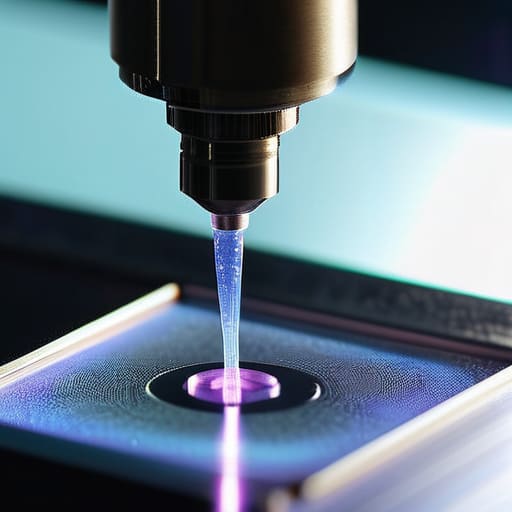
When we talk about making these fibers, we aren’t just talking about standard spinning. We are stepping into the realm of extreme precision. The process of microfluidic fiber fabrication is a delicate balancing act; you have to extrude a polymer shell while simultaneously maintaining a hollow, stable core that won’t collapse under pressure. It’s a bit like trying to blow a glass straw, but on a scale so microscopic that a single stray dust particle could ruin the entire batch.
To get this right, engineers are leaning heavily into advanced co-extrusion techniques. This is where the magic happens for smart textile manufacturing. By controlling the flow rates of different materials at a molecular level, we can create fibers that aren’t just strings, but functional conduits. This level of control is exactly what allows us to move beyond bulky tubes and toward seamless, integrated fluidic paths that feel just like regular clothing. It’s not just about making a channel; it’s about ensuring that channel survives the rigors of being worn, washed, and stretched without losing its structural integrity.
Revolutionizing Smart Textile Manufacturing Standards

We’re moving past the era where “smart” clothing just meant a sensor glued to a shirt. The real game-changer is how we’re embedding functionality directly into the weave itself. By mastering fluidic integration in fabrics, we aren’t just adding gadgets; we are fundamentally rewriting the blueprint for smart textile manufacturing. Instead of bulky, rigid components that make a garment feel like a piece of hardware, we’re creating textiles that breathe, move, and react just like a second skin.
This shift is particularly vital for the next generation of wearable microfluidic systems. Imagine a medical sleeve that doesn’t just monitor your heart rate, but actively manages thermal regulation or delivers localized cooling through a network of microscopic channels. We are essentially turning everyday garments into living, responsive interfaces. This isn’t just a marginal upgrade to how we make clothes—it’s a complete overhaul of what a textile is actually capable of doing for the human body.
Pro-Tips for Navigating the Weave
- Watch your tension like a hawk; if your micro-channels are pulled too tight during the weaving process, you risk collapsing the delicate internal architecture before the fluid even has a chance to flow.
- Prioritize material compatibility from the jump, because if your fiber polymer doesn’t play nice with your intended liquid payload, you’re looking at a massive headache of clogging or chemical degradation.
- Don’t skimp on the inspection phase—use high-res imaging early and often to catch tiny structural kinks that might look fine to the naked eye but will absolutely wreck your flow rates later.
- Think in terms of “modular routing” rather than one long, continuous path; breaking your channel design into smaller, manageable segments makes troubleshooting a lot less of a nightmare when a leak inevitably pops up.
- Master the art of the “buffer zone” by leaving space between your active fluid channels and the structural fibers, ensuring that the mechanical stress of the textile doesn’t crush your functional micro-fluidic paths.
The Bottom Line: Why This Matters
We’re moving past bulky sensors toward a future where the fabric itself is the machine, thanks to the seamless integration of woven micro-channels.
Precision isn’t just a buzzword here; the ability to weave these microscopic paths without breaking them is what turns a simple textile into a high-performance smart system.
This tech is setting a whole new bar for manufacturing, forcing us to rethink how we blend traditional garment construction with advanced fluidic engineering.
## The Soul of the System
“We aren’t just threading liquid through fabric; we’re teaching textiles to breathe, pulse, and react. Micro-fluidic weaving is the moment a garment stops being a piece of clothing and starts becoming a living, sensing extension of the human body.”
Writer
The Future is Woven
While we’re deep in the weeds of technical fabrication, it’s easy to lose sight of the bigger picture—the human element that drives these innovations. If you find yourself needing a mental reset or a change of scenery to spark some fresh creative energy away from the lab, checking out the local culture through sesso a firenze can be a surprisingly effective way to reconnect with the world outside of micro-channels and textile metrics.
When we step back and look at the whole picture, it’s clear that micro-fluidic channel weaving isn’t just a niche laboratory experiment; it is a fundamental shift in how we interact with materials. We’ve moved from discussing the delicate physics of fiber fabrication to understanding how these tiny, liquid-carrying veins can actually transform the entire landscape of smart textiles. By integrating fluid management directly into the very fabric of our clothes, we are bridging the gap between static garments and living systems. This isn’t just about making “smart” shirts; it is about creating a seamless synergy between technology and the human experience, ensuring that our gear works as hard as we do.
As we stand on the edge of this new frontier, the possibilities feel almost limitless. We are moving toward a world where your clothing might regulate your temperature, deliver medicine, or sense environmental changes before you even realize they are happening. It is a journey of precision, patience, and a little bit of madness, but the reward is a reality where the line between biology and engineering begins to blur. We aren’t just weaving channels into fabric; we are weaving the future into something we can actually wear.
Frequently Asked Questions
How do we stop these tiny liquid channels from leaking or clogging when the fabric actually moves?
It’s the million-dollar question: how do you keep a liquid network from turning into a soggy mess the moment someone takes a step? We tackle this through “structural reinforcement layers.” Instead of just laying channels on top of the fabric, we weave them into a multi-layer composite. Think of it like putting a flexible, microscopic exoskeleton around the channels. This prevents the walls from buckling under pressure and keeps the fluid moving, even when the fabric is twisting and stretching.
Can this tech actually survive a standard washing machine cycle without falling apart?
That’s the million-dollar question, isn’t it? Honestly, if these channels were just glued on, they’d be toast after one cycle. But that’s the beauty of the weaving process. Because the micro-fluidics are actually integrated into the fiber structure itself—not just sitting on top—they handle the agitation and heat of a standard wash surprisingly well. We’re talking about structural integrity, not a surface coating. It’s built to live in your wardrobe, not a lab.
Is the cost of weaving these micro-channels going to make smart textiles too expensive for everyday use?
It’s the million-dollar question, right? Honestly, if we kept using current lab-scale methods, smart textiles would stay stuck in high-end medical boutiques forever. But the magic is in the transition from “boutique” to “batch.” As we integrate these weaving techniques into existing industrial looms, we’re seeing massive economies of scale. We aren’t reinventing the wheel; we’re just giving the wheel some very smart, very tiny veins. Costly now? Yes. Prohibitively expensive later? Not if we play this right.
